My name is Barbara Fritschel and I am an Iowa Masters Naturalist candidate and retired librarian. Here I offer recommendations of outstanding nature books in categories arranged by age. I also offer suggestions on how to explore the category with outdoors nature activities. A new category will be added monthly. The list is not intended to be comprehensive but to offer one or two titles an age group. Your local librarian can offer further suggestions.
November –Trees
Trees are an important part of the environment and are readily found in backyards, neighborhoods, local parks and so on. Over the last 20 years research has shown us that trees are more complex than we thought — they even talk to each other! Enjoy these books.
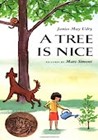
A Tree is Nice
Author: Janice May Udry Illustrator: Marc Simont
Caldecott Award Winner
Age: 4-8
Shows all the benefits trees provide to people just by being trees: shade, fruit, beauty, playing in fallen leaves. Trees are nice, where ever they are, because they are trees.
Terrific Trees
Author: World Book
Age: 4-8
A broad overview about trees. Book contains both illustrations and pictures. Fun facts are spread throughout the book. Includes puzzles, true and false questions, and useful websites.
The Wisdom of Trees
Author and Illustrator: Lita Judge
Age: 5-8 (poetry); 10 and up (side panels)
Using trees from around the world as examples, this book looks at how trees work together. There are several topics such as How to Speak in Tree, Hunger and Winter Dormancy. Each topic has a brief poem suitable for younger readers and a side panel explaining the science behind the poem suitable for older readers or parents.
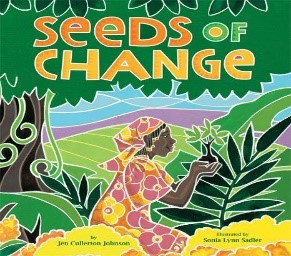
Seeds of Change
Author: Jen Cullerton Johnson Illustrator: Sonia Lynn Sadler
Biography
Age: 8-11
Tells the story of Wangari Maathi, the first African woman and the first environmentalist to win the Nobel Peace Prize in 2004. Learning to respect trees as a young girl, as a scientist and activist, she encouraged people throughout Kenya to replant trees that had been cut down. The book highlights the changes this made on the environment.
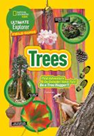
Ultimate Explorer Field Guide
Author: Patricia Daniels
Ultimate Explorer Field Guide series
Ages: 8-12
A great field guide to North American trees. The introduction covers how to use the guide, how to identify different leaves and safety tips for tree walks. Fun facts are included. About one third of the trees included have pictures or drawings of their seeds and leaves to help with identification.
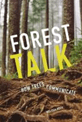
Forest Talk : How Trees Communicate
Author: Melissa Koch
Age: 13-18
One of the significant discoveries in the last several decades is discovering that trees can communicate to each other. After covering some tree basics, this book looks at tree research and the scientists who made these discoveries. The last chapter looks at what further steps we can take to protect trees and forests.
Explore
Challenge your child to learn a new tree every time period you chose (week, month). When weather permits, take a walk and see how many trees they can identify. I did not include the book “I can name 50 trees today” by the Cat in the Hat Learning Series as they cover the trees pretty quickly but it could be helpful for younger children.
Do a leaf/needle log
On walks, get children to “collect” leaves or needles that are new to them. This can be done by collecting them from the ground or taking a picture and post in a notebook or on the cloud. Ask them what catches their eye about the tree– are there animals near by, is it tall or short, what does the bark and branches look like are there any flowers. Note how things change over the seasons. If need be, use a field guide to identify the tree. Please note that if they are physically picking up the leaves that they have permission to do so — many parks do not allow you to take anything out of the park.
 Nature Read and Explore