For thousands of years, humans have looked to the night sky and followed the stars, planets, comets and other objects to tell them when it was time to plant or harvest. Many early structures, such as Stonehenge, served in part as a solar or lunar calendar. The night sky is an easy way to explore nature in the dark. Whether from your backyard or out in the country, the sky is constantly changing.

Exploring the Solar System
Author: Jill McDonald
Age: 3-7
Series: Hello World, Kids’ Guide
Offers basic statistics and information about the sun and the eight planets. Offers an age-appropriate question for each as well like “would you like to live on a hot planet or a cold planet”. Also looks at the dwarf planets. Good introduction for younger kids.
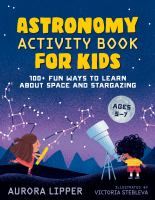
Astronomy Activity Book for Kids
Author: Aurora Lipper; Illustrator: Victoria Stebleva
Age: 5-7
Provides basic facts about objects in the night sky. Reinforces this information through a variety of activities such as word searches, connect the dots and other games. Also provides some sky gazing tips that can be done by eye, with binoculars or telescopes.
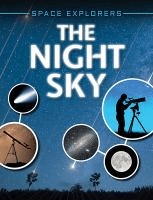
The Night Sky
Author: Giles Sparrow
Age: 5-7
Space Explorer series
A comprehensive introduction. Includes answers to why we have seasons and day and night. Includes lots of photographs and fun facts.
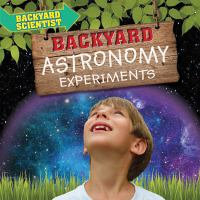
Backyard Astronomy Experiments
Author: Alix Wood
Age: 7-10
Series: Backyard Scientist
After a brief introduction to astronomy, this book provides as series of experiments and activities with step-by-step instructions. There is a brief explanation as to what the activity is designed to show. Most of these experiments require adult supervision. A quiz is included.
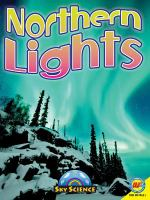
Northern Lights
Author: David Whitfield
Age: 8-10
Series: Take the Sky
Basic description of the northern lights, how they form, where they can be seen and what shapes they take. Good photographs. Includes a quiz and an experiment. While you may not be in an area that normally would get auroras, you may be surprised at some of the locations where they were visible.
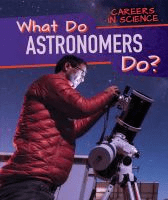
What do Astronomers Do?
Author: Benjamin Proudfit
Age: 9-11
Series: Careers in Science
From cosmologists to planetary scientists this book talks about the various careers in astronomy. The book is realistic about the rigors of the training for these professions. Kids are invited to become amateur astronomers regardless of education background. The best qualification for amateur astronomers is curiosity.
Explore
Many of the books note what you can see in the night sky with your naked eye or binoculars so you don’t need to purchase a telescope. In addition to viewing the traditional constellations, you might encourage your children to create their own. (Like looking at clouds and describing them as dogs, fish, or other creatures but with stars instead.) If you have too many lights in your neighborhood, it may be better to go out to a county park or someplace where there are not as many lights. Check to see if there are any local astronomy clubs–they sometimes set up telescopes for people to use, especially if there is a comet or meteor shower. Some museums or schools have planetariums which is an easy introduction to the night sky.
 Nature Read and Explore