Animals migrate for many reasons – food, better climate or to go to breeding grounds. Some animals, like salmon, migrate once. Others migrate together with other species like wildebeests and zebras. Some travel thousands of miles while snakes may go hundreds of feet. Most migrations are seasonal and happen during spring, fall or winter.
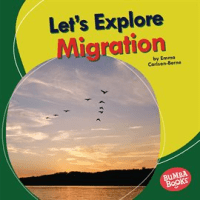
Let’s Explore Migration
Author: Emma Carlson-Berne
Age: 4-7
Series: Let’s Explore Nature’s Cycles
A good basic introduction to the animals and reasons why they migrate. Includes thought provoking questions and a migration map for monarch butterflies.
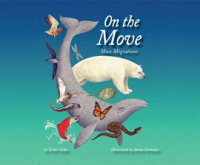
On the Move: Mass Migrations
Author: Scotti Cohn Illustrator: Susan Detwiler
Age: 4-9
Award: Outstanding Science Trade book
A beautifully illustrated book, the focus is on North American animals. Provides a good representation of animals that migrate including some lesser-known ones such as snakes and horseshoe crabs. Includes more specific information about each animal as well as showing its’ habitat to help determine if any are located near you.
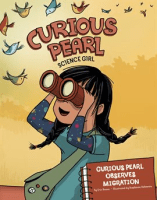
Curious Pearl Observes Migration
Author: Eric Braun Illustrator: Stephanie Dehennin
Age: 5-7
Fiction
Series: Curious Pearl Science Girl
Curious Pearl helps her friend Sal figure out why all the warblers have left his yard. Shows an age-appropriate way to explore nature questions and discusses other animals who migrate and why. An exercise is included.
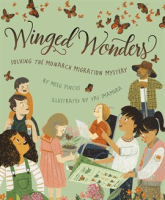
Winged Wonders Solving the Monarch Migration Mystery
Author: Meeg Pincus Illustrator: Yas Imamura
Age: 6-10
Award: American Association for the Advancement of Science/Subaru finalist 2020
How do we know if a species migrates? This book shows how both professional and “citizen scientists” (including school children) worked together to show that monarch butterflies do migrate and for several thousand miles. The book encourages your citizen scientist to help work with others to protect this insect with several suggestions in the back.
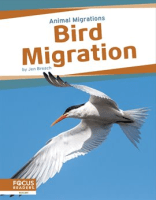
Bird Migration
Author: Jen Breach
Age: 7-11
Series: Animal Migration
Looks at different birds and their migrations. Includes the reasons for their migrating and the dangers they face. Includes a page of questions to help reenforce the material and provides a link for more content. Notes that not all birds fly to migrate – penguins swim and emus walk.
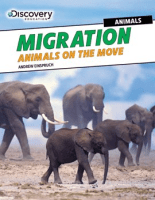
Migration Animals on the Move
Author: Andrew Einspruch
Age: 8-11
Series: Discovery Education – Animals
Looks at migrating animals from around the world. Discusses the types of migration – one-way, nomadic, etc. Looks at wildebeests, whales, locusts, elephants and others. Has a brief discussion of the dangers faced by migrating animals.
Explore
Birds may be the easiest animal to observe migrating. Look around and see what birds are missing from your neighborhood. Do you hear geese flying overhead? In spring, have a contest with your children to see who can spot the first robin. Search for sites like Migration tools – BirdCast that offer live bird migration maps during peak migration times to see what is migrating through your town. Keep a record of what you see.
Another fun activity is to look at what birds are wintering in your area? Did they migrate there? Are they yearlong residents? As winters get warmer some birds, like Canada geese are not migrating if they have access to open water throughout the winter.
 Nature Read and Explore